DAMS Research Group

The DAMS (DAta Management & Semantics) Research Group at UMBC is lead by Professor Roberto Yus. We focus on semantic and privacy-aware data management in IoT environments.
Read more about our group → Interested in joining the DAMS group?
Latest News
Our paper on co-designing sensorization plans for long-term care settings together with nursing home leadership, direct care staff, residents, and resident family members has been accepted in the journal Applied Clinical Informatics.
No Sensorization without Representation: Co-designing Tailored Sensorization Plans with Nursing Home Leadership, Direct Care Staff, Residents, and Resident Family Members
Zainab A. Balogun, Lewis Davis II, Luke Zimmermann, Yoon Chung Kim, Roberto Yus, Kelly Doran, Sarah Holmes, and Tera L. Reynolds
Pardis Emami-Naeini (Duke University) will give an invited talk at the DAMS lab meeting on Friday, October 30, from 12:00 to 1:00 pm. The talk is open to all — please get in touch if you would like to attend.


Recent Publications
Quickly discover relevant content by filtering publications.
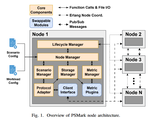
Projects
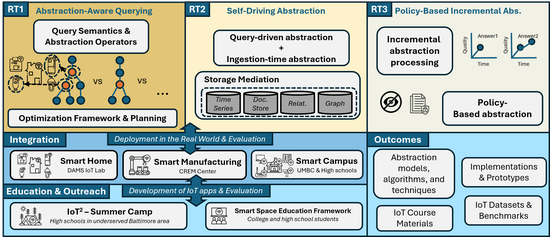
Sensorless IoT
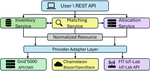
IoT deployments collect enormous amounts of sensor data, but making use of it still requires knowing which sensors to query, which machine learning models to run, and how to stitch the results together — expertise most organizations do not have.
Smart Campus
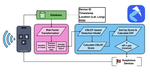
Several of the group’s systems are deployed and evaluated on UMBC’s campus, which doubles as a living testbed for research on IoT data management and privacy. This page collects that campus-deployment work; new deployments are added here as they are published.
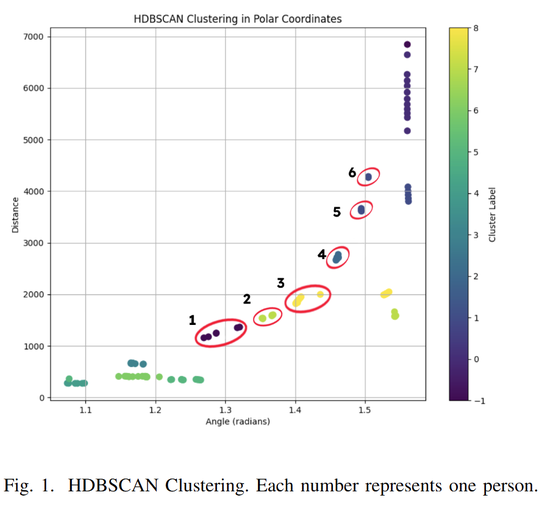
Network Traffic Analysis of Smart Devices
Smart devices talk to the network far more than their users expect, and the traffic they generate reveals a lot: which services they contact, how often, and what they do when nobody is using them.
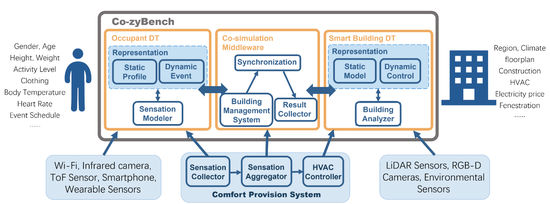
Smart Thermal Comfort Provision
Heating, ventilation and air conditioning accounts for roughly 40–60% of a building’s energy use, yet the reason to run it at all is the comfort of the people inside. Pervasive and mobile computing makes it possible to sense individual thermal sensations and manage HVAC around them, but evaluating such systems is hard: real-world experiments are expensive, slow, privacy-sensitive and rarely cover the diversity of occupants and climates, while simulations have to be shown to reflect reality.
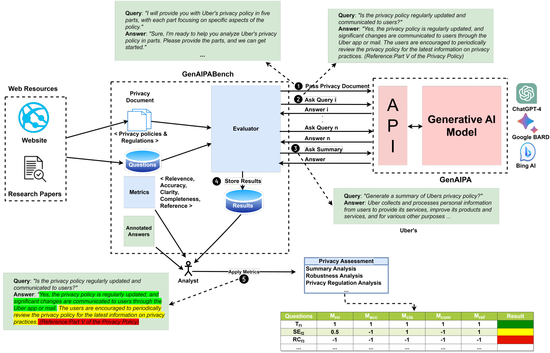
AI-Assisted Privacy Document Analysis
Privacy policies are the main channel through which organizations tell people what happens to their data, yet they are long, intricate, and routinely skipped or misunderstood — and for smart devices they are scattered across manufacturers and e-commerce platforms, so even finding the right policy is hard.


Funding


Awards & Recognition
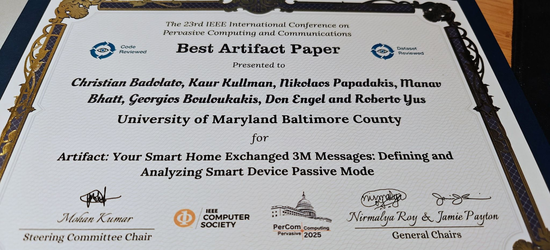
Best Artifact Award
PerCom 2025
For Your Smart Home Exchanged 3M Messages: Defining and Analyzing Smart Device Passive Mode.
Mark Weiser Best Paper Award
PerCom 2022
For SmartSPEC: Customizable Smart Space Datasets via Event-Driven Simulations.
2nd place, Sandpit Challenge on Digital Trust
INCS-CoE 2022
With Royal Holloway University of London and Keio University Tokyo.
Contact
- ryus@umbc.edu
- 1000 Hilltop Circle, Baltimore, MD 21250
- Information Technology and Engineering (ITE) Building, Room 230