Sensorless IoT
Towards a Sensorless Internet of Things through Sensor Data Management Abstraction
IoT deployments collect enormous amounts of sensor data, but making use of it still requires knowing which sensors to query, which machine learning models to run, and how to stitch the results together — expertise most organizations do not have. This project introduces a semantic abstraction layer that hides that complexity, so users can ask directly for high-level concepts such as occupancy or energy consumption and let the system work out which sensors, models and data pipelines are needed to answer them.
Supported by NSF CAREER award #2542782, July 2026 – June 2031.
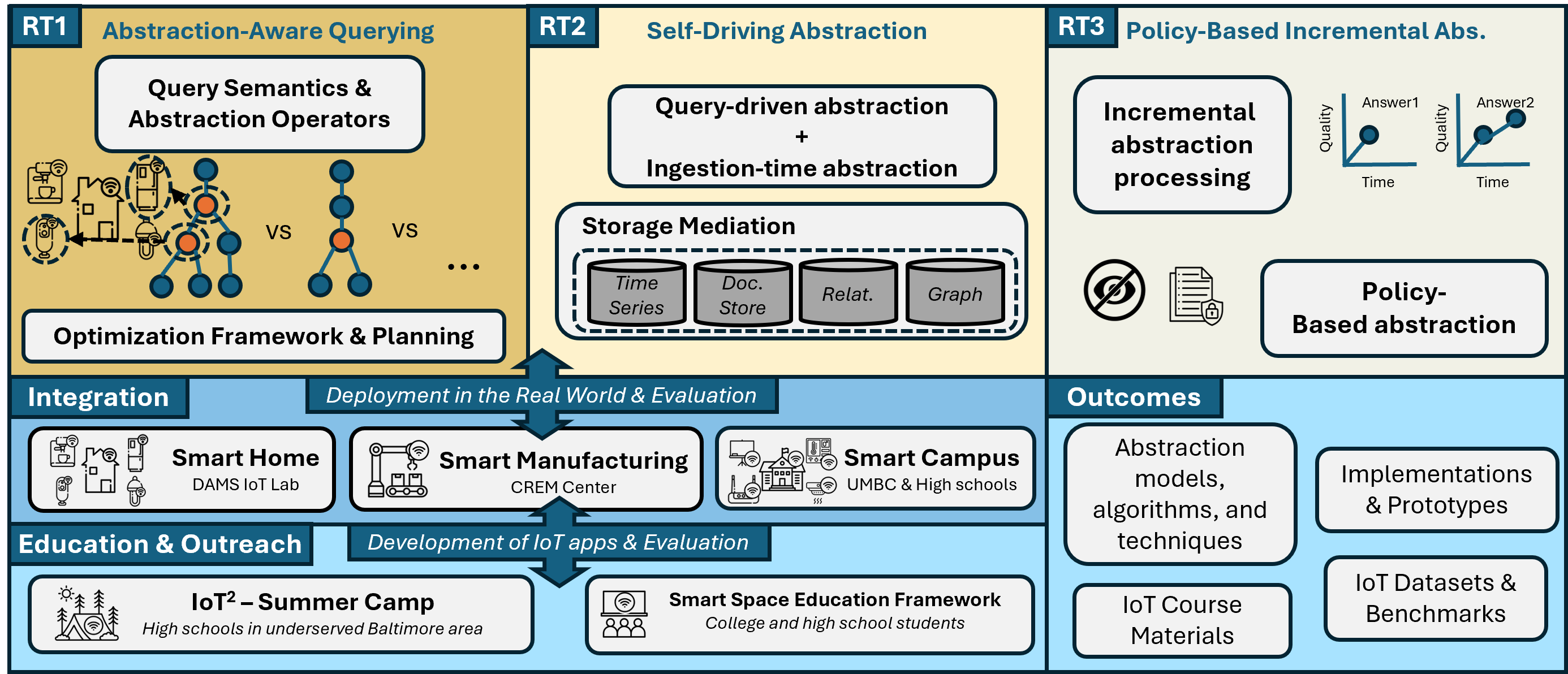
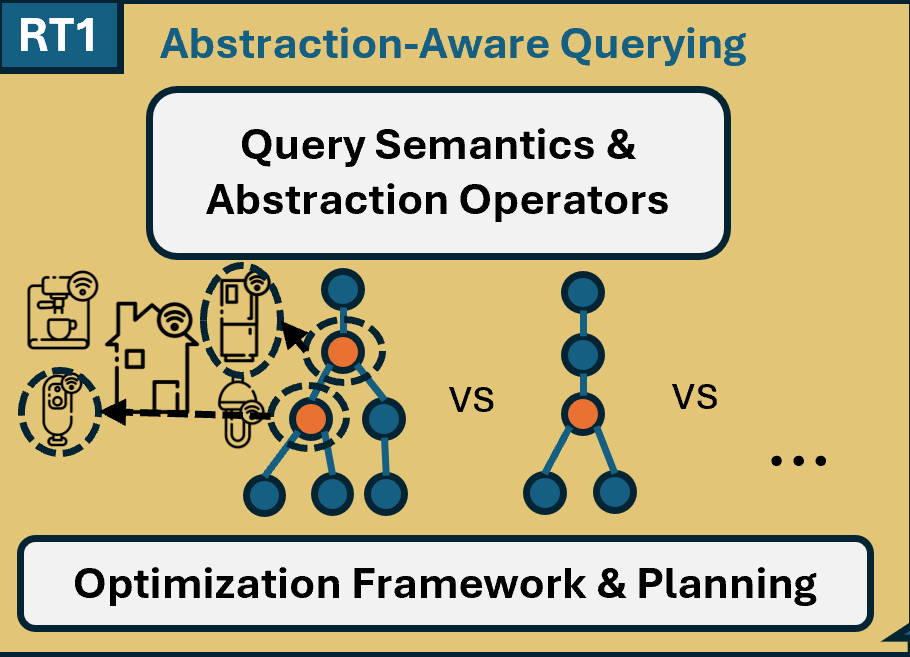
RT1 — Abstraction-aware querying
Formal semantics for queries over abstracted sensor data — abstraction operators that let a query ask for occupancy or energy consumption rather than for particular sensors — and an optimization framework that plans which sensors, models and pipelines answer it best.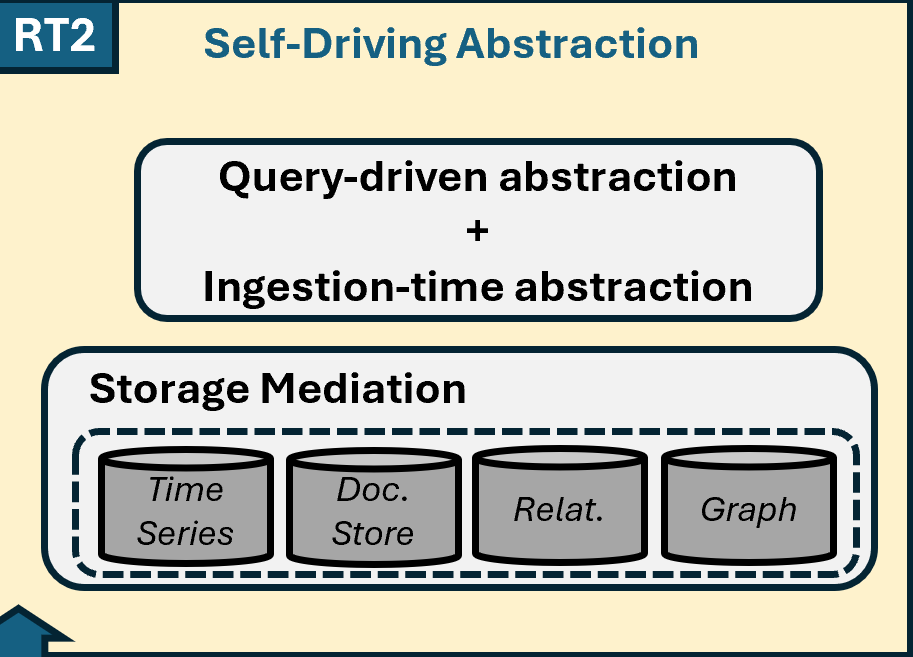
RT2 — Self-driving abstraction
Abstraction performed both when a query arrives and when data is ingested, with a storage-mediation layer that plans across heterogeneous back ends — time-series, document, relational and graph stores — so the user never has to choose one.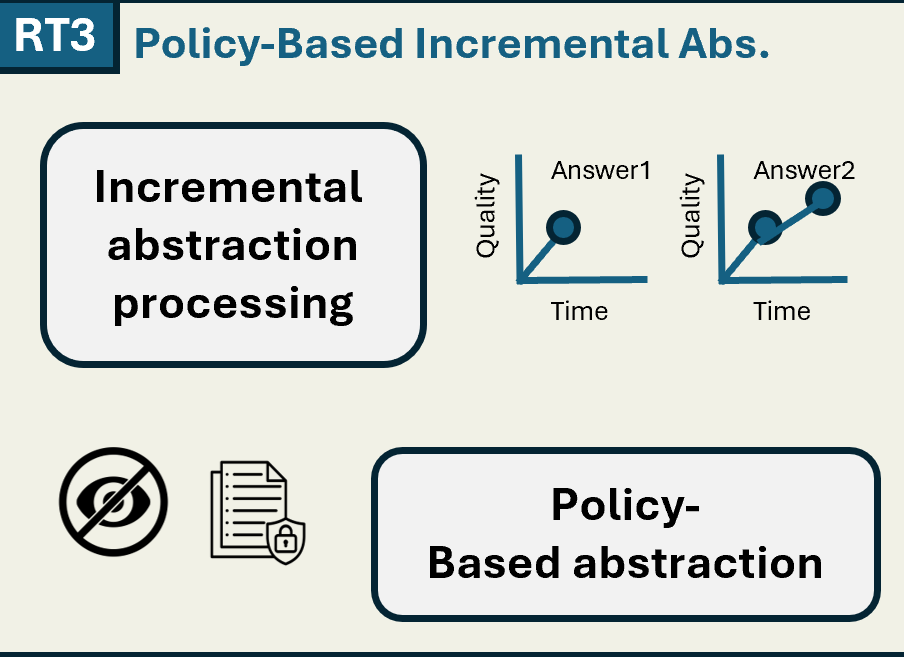
RT3 — Policy-based incremental abstraction
Incremental processing that returns an early answer and improves its quality over time, and policy-based abstraction that enforces privacy constraints — the step that extends the approach to federated settings.Highlights
- NSF CAREER award #2542782 — $599,184 over five years (July 2026 – June 2031), Division of Information and Intelligent Systems
- Validated on real deployments: UMBC’s smart campus, manufacturing testbeds and smart home laboratories
- Education and outreach built in: new IoT course material, high school internships and summer programs for Baltimore-area students
Team
-
 Roberto YusAssistant Professor, University of Maryland, Baltimore County

Roberto Yus
Assistant Professor
My research interests include Data Management, Knowledge Representation, the Internet of Things, and Privacy.